
What Is an Autonomous Mobile Robot (AMR)? A Complete Beginner's Guide
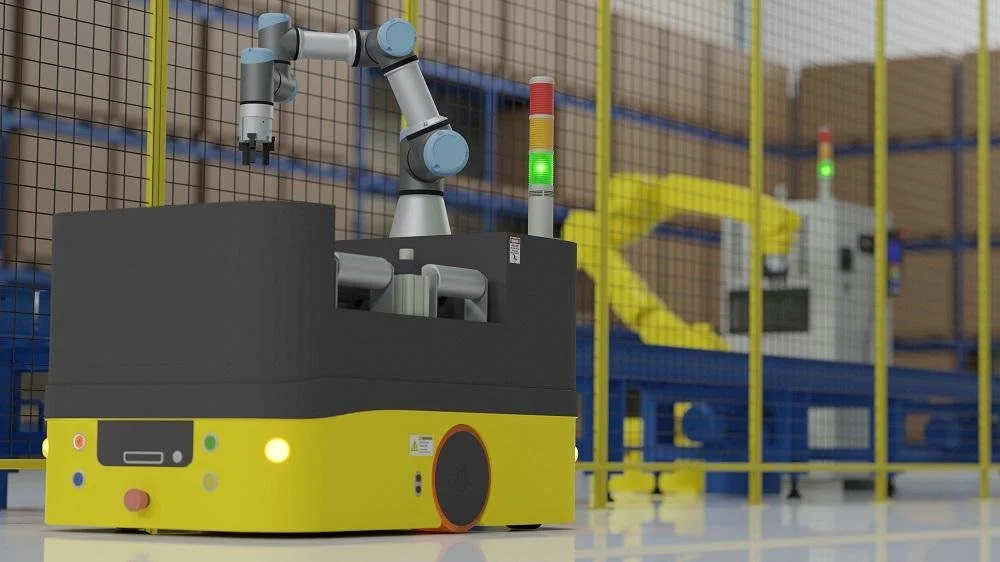
As industries continue to very much embrace automation, the autonomous mobile robot (AMR) has become one of the most exciting innovations in modern robotics. Unlike traditional automated systems that follow fixed paths, an AMR can navigate dynamic environments, avoid obstacles, and make intelligent decisions in real time. This flexibility makes AMRs an essential solution for businesses looking to improve productivity, reduce costs, and automate repetitive tasks.
What Is an Autonomous Mobile Robot (AMR)?
An autonomous mobile robot (AMR) is a robotic platform that moves independently through its environment without relying on predefined tracks, magnetic tape, or fixed guidance systems. Instead, it uses advanced sensors, cameras, LiDAR, artificial intelligence (AI), and intelligent software to understand its surroundings and determine the best route to its destination.
Unlike Automated Guided Vehicles (AGVs), which require physical infrastructure and fixed pathways, AMRs dynamically adjust their routes based on changing conditions. If an obstacle appears, the robot simply calculates a new path and continues its task safely.
This intelligent navigation is one of the key reasons AMRs have become a cornerstone of modern mobile robotics.
How Does an AMR Work?
An AMR combines several advanced technologies to operate autonomously.
These typically include:
· LiDAR sensors for accurate mapping and navigation
· Depth cameras and computer vision for obstacle detection
· AI-powered decision-making algorithms
· Simultaneous Localization and Mapping (SLAM)
· Wireless connectivity for fleet management
· Onboard computing for real-time processing
Using these technologies, the robot continuously scans its surroundings, builds a map of the environment, determines its own location, and safely navigates to its destination.
Because an AMR constantly updates its route, it can safely operate alongside people, equipment, and other robots.
Common Applications of Autonomous Mobile Robots
The versatility of autonomous mobile robots allows them to be deployed across many industries.
Manufacturing
Factories use AMRs to transport materials between production lines, deliver components, and reduce manual handling.
Warehousing and Logistics
Distribution centres rely on mobile robotics for inventory transport, order picking, pallet movement, and warehouse optimisation.
Healthcare
Hospitals use AMRs to deliver medications, transport medical supplies, and move laboratory samples while reducing staff workload.
Education and Research
Universities and research institutions use AMRs as development platforms for robotics, artificial intelligence, and autonomous navigation research.
Hospitality and Retail
Hotels, restaurants, and retail businesses use autonomous robots for customer deliveries, room service, inventory management, and cleaning.
Benefits of AMR Technology
Businesses across multiple industries are investing in autonomous mobile robot solutions because they deliver measurable operational improvements.
Some of the biggest advantages include:
· Increased productivity through continuous operation
· Improved workplace safety by reducing manual transport
· Lower labour costs for repetitive tasks
· Flexible deployment without infrastructure changes
· Easy scalability as business needs grow
· Real-time monitoring and fleet management
· Improved operational efficiency
Because AMRs require little physical modification to existing facilities, organisations can adopt automation much faster than traditional automated systems.
Why Mobile Robotics Is Growing So Quickly
The rapid advancement of artificial intelligence, machine learning, and sensor technology has made mobile robotics more affordable, reliable, and accessible than ever before.
Businesses are no longer limited to large-scale industrial automation. Small and medium-sized organisations can now deploy intelligent robotic systems that adapt to changing environments while delivering a strong return on investment.
As industries continue moving toward smart factories and Industry 4.0, AMRs will play an increasingly important role in streamlining operations and improving efficiency.
Discover the Future of Robotics with MiRobot
Whether you're a researcher, educator, developer, or business exploring automation, understanding autonomous mobile robots is the first step toward adopting smarter technologies.
At MiRobot, we develop innovative mobile robotics platforms designed for education, research, industrial applications, and AI development. Our advanced robotic solutions help organisations accelerate innovation while making robotics more accessible for everyone.