
Booster K1 Humanoid Robot: The Future of AI, Robotics Education, and Research
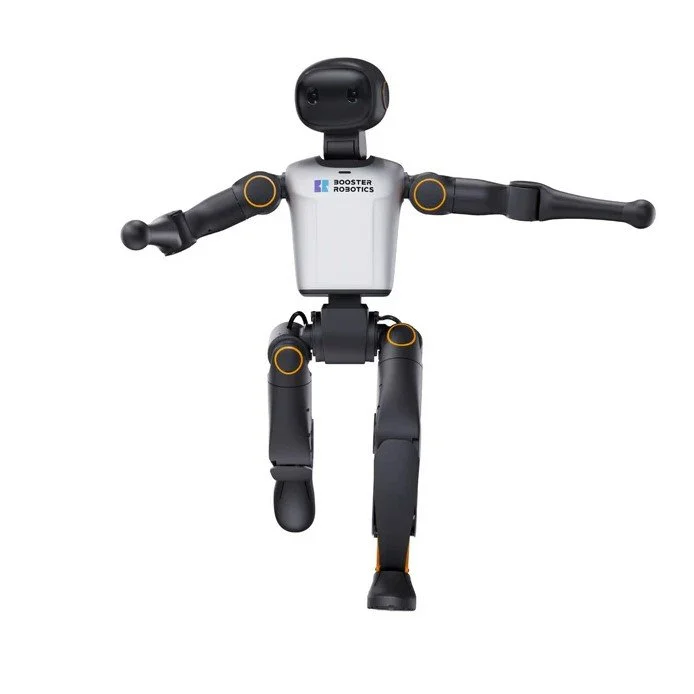
Humanoid robots are transforming industries, education, and artificial intelligence research faster than ever before. Among the latest innovations leading this revolution is the Booster K1 Humanoid Robot, available through MiRobot. Designed for developers, universities, robotics researchers, and AI engineers, the Booster K1 combines advanced computing, human-like mobility, and an open development ecosystem into a compact, competition-proven platform.
Unlike most humanoid robots that focus primarily on demonstrations, the Booster K1 is built for real-world robotics development. Whether you're creating AI algorithms, experimenting with autonomous navigation, or competing in RoboCup events, the K1 provides the flexibility and performance needed for modern robotics innovation. It is available in Geek, Edu, and Pro editions, allowing organizations to select the right balance of performance and budget.
What Is the Booster K1 Humanoid Robot?
The Booster K1 is a lightweight humanoid robot developed specifically for education, AI development, robotics research, and competitive robotics. Standing approximately 95 cm (37 inches) tall and weighing around 19.5 kg, it delivers an impressive combination of portability, durability, and intelligent motion control.
One of its defining characteristics is its 22 Degrees of Freedom (DOF), allowing the robot to perform complex human-like movements including:
· Walking
· Running
· Balancing
· Kicking
· Dancing
· Gesture recognition
· Recovery after falls
These capabilities make the K1 an excellent platform for studying locomotion, reinforcement learning, embodied AI, and robot-human interaction.
Key Features of the Booster K1
1. Powerful AI Computing
The Booster K1 comes in three configurations:
· Geek – up to 48 TOPS AI performance
· Edu – up to 117 TOPS
· Pro – up to 200 TOPS
These computing capabilities allow developers to run advanced AI applications directly on the robot without depending entirely on cloud processing.
2. ROS 2 Support
The robot fully supports ROS 2 (Robot Operating System), making it compatible with thousands of robotics libraries and research tools.
Developers can rapidly build applications involving:
· Autonomous navigation
· Motion planning
· Sensor fusion
· Computer vision
· AI control systems
3. Simulation Compatibility
Before deploying algorithms onto physical hardware, users can test them using leading simulation platforms including:
· Isaac Sim
· MuJoCo
· Webots
Simulation significantly reduces development time while improving safety and reliability.
4. Multimodal AI
The Booster K1 supports several intelligent interaction technologies including:
· Text-to-Speech (TTS)
· Automatic Speech Recognition (ASR)
· Computer Vision (YOLO)
· Optional Edge Large Language Models (LLMs)
This enables developers to create robots capable of natural human interaction and intelligent decision-making.
Why Choose the Booster K1?
Many humanoid robots are expensive research platforms requiring significant customization before they become useful.
The Booster K1 offers a different approach by providing:
· Ready-to-use software
· Developer APIs
· Visual programming
· Mobile app support
· Competition-ready performance
· Research-focused architecture
This allows students and researchers to spend more time developing AI and less time configuring hardware.
Applications of the Booster K1
The Booster K1 supports numerous use cases across academia and industry.
Robotics Education
Universities and STEM institutions use the robot to teach:
· Programming
· Artificial Intelligence
· Robotics Engineering
· Machine Learning
· Mechatronics
· Control Systems
Students gain practical experience working with real humanoid hardware rather than simulations alone.
AI Research
Researchers use the K1 for projects involving:
· Reinforcement Learning
· Embodied AI
· Human-Robot Interaction
· Computer Vision
· Motion Planning
· Autonomous Navigation
RoboCup Competitions
The Booster K1 gained worldwide recognition after becoming the RoboCup 2025 KidSize Champion, demonstrating exceptional agility, balance, and athletic performance.
Robotics Product Development
Developers can prototype AI-driven robotics applications before scaling them into commercial products.
Open Development Ecosystem
One of the strongest advantages of the Booster K1 is its developer-friendly ecosystem.
Developers receive access to:
· High-level motion APIs
· Low-level hardware interfaces
· Status feedback APIs
· Remote monitoring
· Mobile control applications
· Visual programming tools
This flexibility makes the platform suitable for both beginners and experienced robotics engineers.
Booster K1 Specifications
FeatureSpecification
Height
95 cm
Weight
19.5 kg
Degrees of Freedom
22 DOF
AI Computing
48–200 TOPS
Operating System
ROS 2 Compatible
Simulation
Isaac Sim, MuJoCo, Webots
AI Features
TTS, ASR, YOLO Vision, Edge LLM
Battery
30–80 minutes depending on model
Models
Geek, Edu, Pro
Frequently Asked Questions
1. What is the Booster K1 humanoid robot used for?
The Booster K1 is designed for robotics education, AI research, software development, autonomous robotics, and robotics competitions such as RoboCup.
2. Does Booster K1 support ROS 2?
Yes. The robot offers full ROS 2 compatibility, allowing developers to integrate existing robotics software and research frameworks.
3. Can universities use the Booster K1 for teaching?
Absolutely. The Booster K1 was specifically developed for higher education, robotics laboratories, STEM programs, and AI research institutions.
4. What AI capabilities does the Booster K1 offer?
Depending on the model, the robot provides up to 200 TOPS of AI computing, supports speech recognition, text-to-speech, computer vision using YOLO, and optional Edge LLM integration.
5. What simulation platforms are supported?
Developers can work with Isaac Sim, MuJoCo, and Webots before deploying software onto the physical robot.
6. Is the Booster K1 suitable for beginners?
Yes. The Geek and Edu models are particularly well suited for students and new robotics developers because they include APIs, visual programming, and comprehensive development tools.
7. How long does the battery last?
Battery life ranges from approximately 30 minutes on the Geek model to around 80 minutes on the Edu and Pro models, depending on usage.
8. Why buy the Booster K1 from MiRobot?
MiRobot offers a complete robotics ecosystem, technical support, educational resources, and access to advanced robotics platforms tailored for research and innovation.
Conclusion
The Booster K1 represents a significant advancement in humanoid robotics by combining intelligent AI computing, advanced mobility, developer-friendly software, and proven competition performance in a compact platform. Whether you're a university, research laboratory, robotics startup, or AI developer, the Booster K1 provides the tools needed to explore the future of embodied intelligence.
With ROS 2 compatibility, simulation support, multimodal AI capabilities, and a flexible software ecosystem, the Booster K1 is more than a robot—it's a complete development platform for the next generation of robotics innovation. Explore the Booster K1 and other advanced robotics solutions through MiRobot.